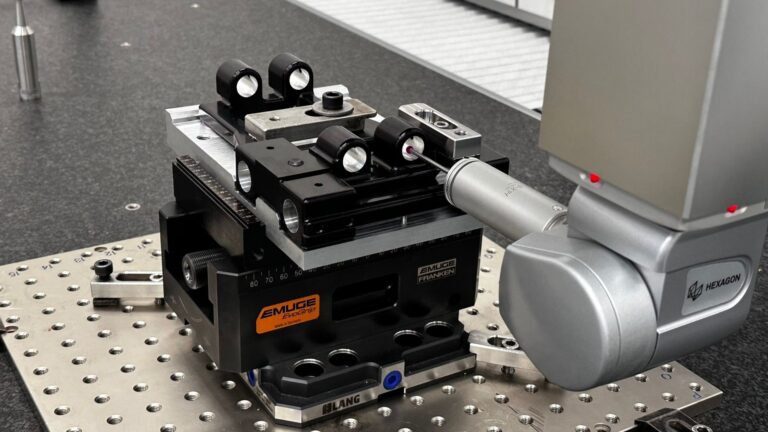
In manufacturing, some parts require much more than simply meeting a specific geometry. They require a strategy capable of maintaining precision, stability, and repeatability throughout the entire process.
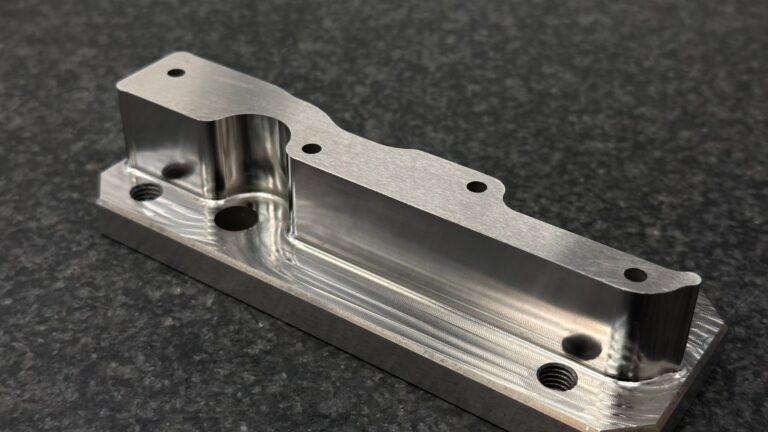
That was the challenge behind this automotive forming tool, a highly complex component that required angled holes aligned with the center of gravity of the geometry, while maintaining the dimensional control required by the application.
The Challenge
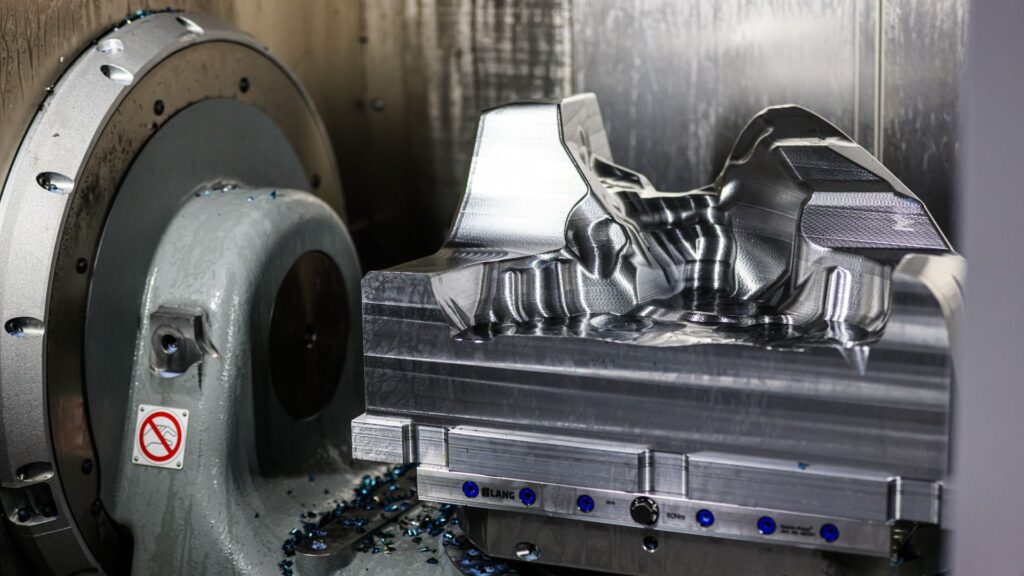
The component was manufactured from K110 BOHLER steel, hardened to 60/62 HRc, with dimensions of 225 × 370 × 480 mm and a required precision of ±0.015 mm.
Its geometry made the workholding strategy especially important. With a conventional process, manufacturing the part would have required multiple setups to access its different areas. Each new setup represents additional time and, more importantly, another opportunity to introduce cumulative variations into the process.
The objective was clear: reduce intermediate operations without compromising the precision of the finished component.
A 5-Axis Machining Strategy
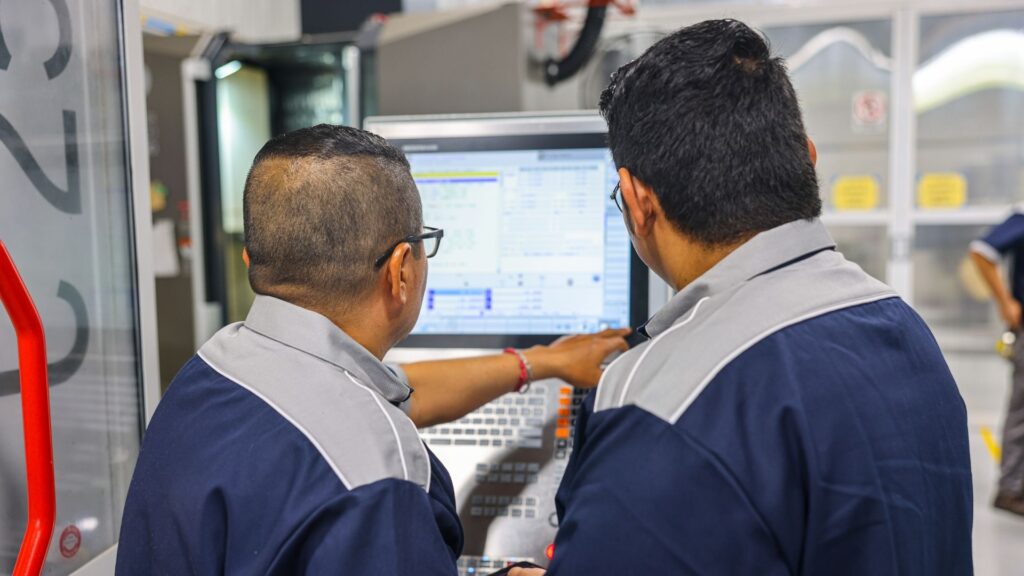
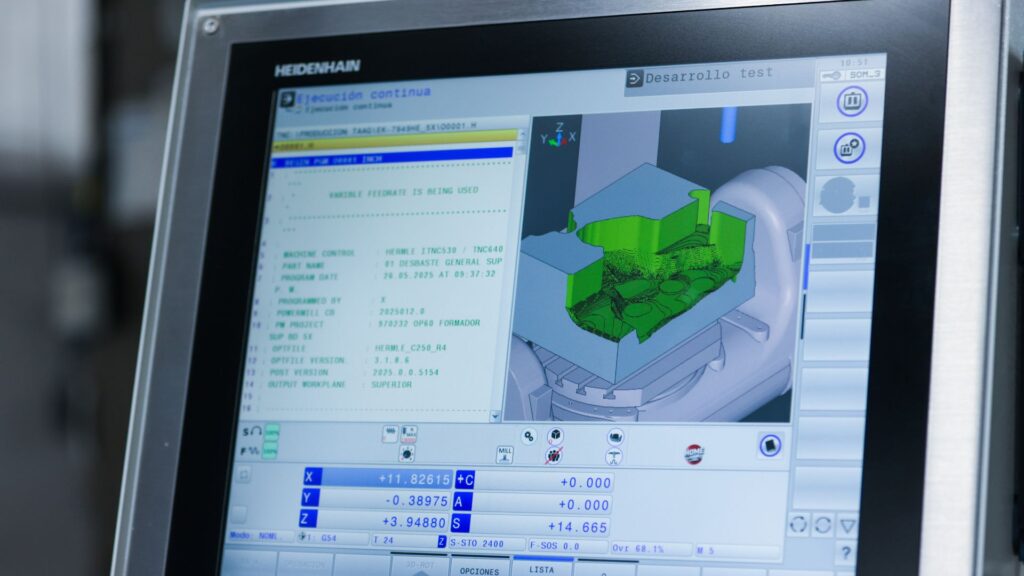
To manufacture the forming tool, we developed a strategy based on simultaneous 5-axis machining using a HERMLE C 250.
The ability to orient both the workpiece and the cutting tool during machining allowed us to access the required geometries from different angles while maintaining a single manufacturing reference. As a result, the component could be machined in a single setup, including the angled holes that represented one of the project’s main technical challenges.
This reduced setup changes, provided greater dimensional stability throughout the process, and cut total production time by more than 50%.
Precision Is Also Built Into the Process
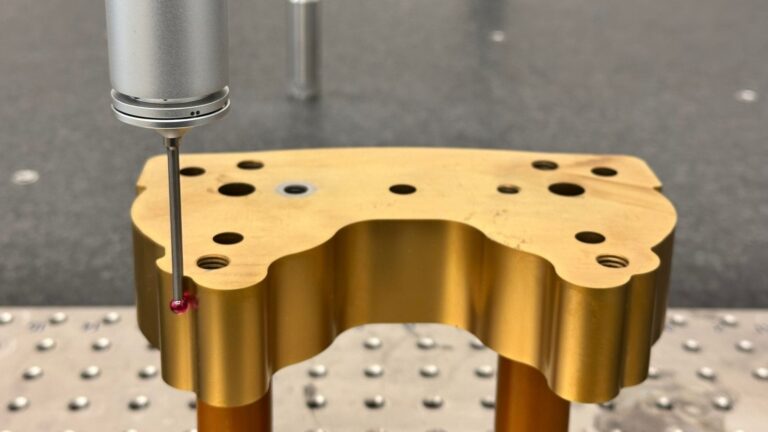
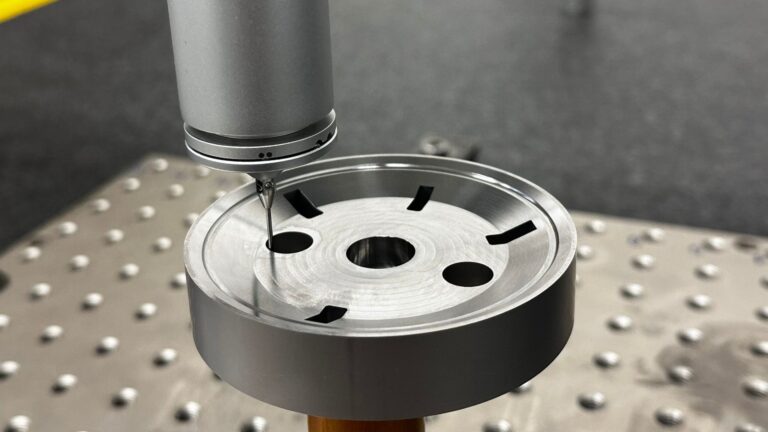
For us, manufacturing high-precision components is not simply about having advanced machinery. It means correctly defining the manufacturing strategy, workholding, cutting conditions, programming, and dimensional control that support every project.
This automotive forming tool is an example of how the combination of technical experience, 5-axis technology, and process control allows us to tackle geometries that would traditionally require multiple operations.
Because when a component is critical, precision does not begin when the final result is measured.
It begins with the way we choose to manufacture it.